
Why A Drone Over A Wildfire Is A Real Operating Risk For Commercial Teams
A firefighting helicopter encountered an unauthorized drone near Moab on June 9. The incident is a reminder that wildfire TFRs are not just a hobbyist problem. They are an operating risk commercial teams need to plan around.
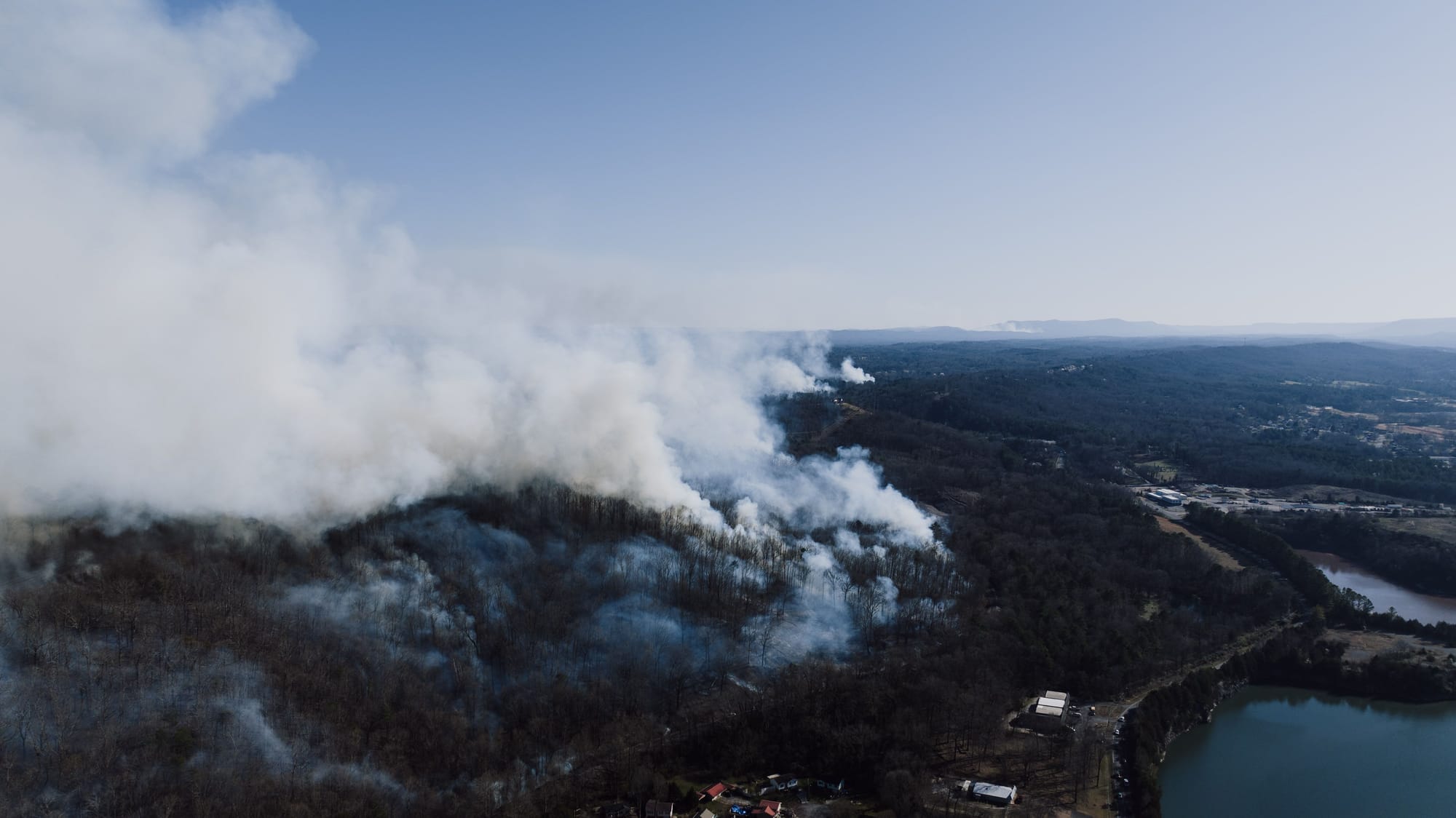
On June 9, 2026, a firefighting helicopter working a fire response near Moab, Utah encountered an unauthorized drone operating over the fire area. KUTV reported the incident from Utah Fire Info: no aircraft were struck and no injuries were reported, but the drone created a serious safety hazard and affected aerial firefighting operations.
That is the operating problem in one sentence. A drone does not need to hit a helicopter to change the fire plan. Once a drone is reported near an active wildfire, aviation managers may have to move aircraft away or hold them on the ground until they are confident the airspace is clear.
The public warning remains simple because it is true: if you fly, they cannot. For commercial drone teams, that line should be treated as operational policy, not public-service copy.
The Palisades Case Set The Enforcement Baseline
The reference case is the January 9, 2025 drone strike on a Canadair CL-415 Super Scooper during the Palisades Fire. The aircraft landed safely, but the collision damaged the wing and pulled a firefighting asset out of service during an active disaster.
The pilot, Peter Tripp Akemann, later pleaded guilty to unsafe operation of an unmanned aircraft. The U.S. Department of Transportation Office of Inspector General says Akemann was sentenced on September 15, 2025 to 14 days of imprisonment, 30 days of home confinement, 24 months of supervised release, $146,765 in restitution, a $9,500 fine and a $25 special assessment.
Moab did not become that case because there was no collision. But the business lesson is the same: a small aircraft in the wrong wildfire airspace can shut down larger aircraft, trigger enforcement, damage a client relationship and end a season's worth of work.
The 2025 Number That Should Reset The Baseline
The 2025 incursion data is the piece operators should not wave away. The U.S. Forest Service reported 218 drone sightings over active wildfires in 2025, most of them around the Eaton and Palisades fires in Los Angeles. That was more than the seven-year national total of 125 reported incidents before it.
That means fire agencies are not treating unauthorized drones as rare edge cases anymore. They are part of the operating environment, especially in the western United States and anywhere fire aviation is active.
The cost can show up immediately. During Utah's 2025 Buckley Draw Fire near Provo, KUER reported that repeated drone incursions added up to roughly 6.5 to 11 hours of grounded or rerouted aircraft time. Officials described single-engine air tankers costing more than $2,000 per operating hour and larger tankers costing as much as $20,000 per hour.
What The 2026 Enforcement Pattern Looks Like
Two pieces of the enforcement picture matter for operators.
The first is federal. The FAA frequently issues Temporary Flight Restrictions around disaster and emergency operations, and drones are aircraft for those purposes. A Part 107 certificate, waiver, recurring customer contract or saved LAANC approval does not authorize a flight inside a wildfire TFR unless the operator has specific permission for that TFR.
The FAA has also made clear that unsafe or unauthorized drone operations can carry serious penalties. In its 2024 civil penalty announcement, the agency said drone operators who conduct unsafe or unauthorized operations can face fines up to $75,000 per violation, and certificates can be suspended or revoked.
The second track is state and local. In wildfire country, local incident commanders, state fire agencies and law enforcement are often the first people dealing with the airspace conflict. For a commercial team, that can mean the practical consequence arrives before any federal paperwork does: the job is stopped, the client is notified, and the operator is now tied to a public safety incident.
Why This Is A Commercial Operations Problem
It is tempting to read the Moab incident as a warning to careless hobbyists. Commercial teams should read it as an operating-environment problem.
Wildfire TFRs can go up quickly, sometimes outside what a customer thinks of as peak fire season. They can cover larger footprints than a job manager expects. A legal flight at 7:00 a.m. can be illegal by 10:00 a.m. if a TFR is posted over the same ridge, corridor or right-of-way.
For teams working infrastructure inspection in California, transmission-line patrols in the Pacific Northwest, pipeline right-of-way in the Rockies, or post-fire damage assessment in the Southwest, the practical move is to treat wildfire airspace the way the industry now treats major-event airspace. Aerosyne covered that same planning pattern in our guide to FIFA World Cup 2026 no-drone zones: check current restrictions every time, do not rely on stale approvals, and reschedule when the airspace picture is unclear.
The Items To Pre-Write Into Your Operations Manual
- Run a TFR check three times. Check during planning, again the morning of the flight, and again from the launch site before the first battery is armed.
- Make visible fire activity a hard stop. A smoke column, active fire aircraft or nearby suppression work should pause the mission even if a TFR has not appeared yet.
- Prepare client reschedule language. A flight commissioned a week ago can become illegal overnight. A short pre-approved note explaining TFR-driven reschedules saves time and protects the relationship.
- Keep identification ready. Registration, Remote ID status, pilot certificate details and aircraft serials should be available before the crew leaves the shop.
- Map alternate launch options. For recurring work in fire country, document alternate launch sites and job sequencing so a partial TFR does not automatically stop the entire contract.
The Practical Takeaway
Wildfire drone incursions are not an abstract compliance issue. They affect aircraft routing, suppression timing, public safety risk and the way commercial teams schedule summer work. The operators who handle 2026 cleanly will be the ones who pre-write the TFR check, build the reschedule language and treat every smoke column as a flight they are not flying.

Related reading
Continue the thread.
Related posts are pulled from the same primary topic as the current article.
Detected, Not Stopped: What a Prison Drone Drop Says About Perimeter Programs
A reported drone delivery into a Quebec prison shows why a detection rate is not a stop rate. Perimeter programs need a measured chain from alert to outcome.

An airport emergency exercise now starts with a paperwork request
Drones have become a normal part of airport emergency exercises. The FAA has now spelled out who requests airspace access, and how far ahead of the drill it has to happen.

Connecticut Wired a Drone Purchasing Rule Into Public Contracts
The October 1 stage of Connecticut's drone act reaches contractors and any purchase made with state or federal money, while the state's 250 foot critical infrastructure rule has been in force for a year.