
What Guyana's Drone Service Boom Gets Right About Field Operations
A Guyana drone-services case study shows why repeatable workflows, specialist skills, and local capacity matter more than adding another aircraft.

A commercial drone business becomes durable when it can take the same crew, the same checklists, and the same data handoff into a second and third kind of job without losing control of the work.
That is the useful lesson in a July 27 report from Commercial UAV News about Guyana's growing drone-services market. The report follows a local operator whose work grew from farm imagery into real estate, surveying, energy support, agricultural mapping, and application work. The setting is Guyana, but the operating question is familiar to Canadian and US teams: how do you turn a successful flight into a service a client can buy again?
The answer is not a longer equipment list. It is a repeatable service system that defines the decision, controls the site, manages the data, and gives the client a clear deliverable.
A new service line starts with a client decision
A first assignment can open the door to more work. A farmer asks for aerial images, then wants a map. A contractor wants a map, then asks for a stockpile estimate or a progress record. An industrial client asks for an inspection report that a site manager can use without interpreting raw media.
Those assignments may all use a drone, but they are not operationally identical. Photography, surveying, inspection, mapping, and application work have different acceptance tests, quality controls, reviewers, and consequences when a result is wrong. Before accepting a new job type, write down five items:
- The decision the client will make from the deliverable. A site photo, orthomosaic, thermal finding, and volumetric estimate do not carry the same consequence.
- The field condition that can invalidate the result. Wind, lighting, standing water, vegetation movement, access restrictions, or an unavailable site escort can each matter.
- The required output and handoff. Define the coordinate system, naming convention, image format, report template, delivery route, and retention period before the flight.
- The person who accepts the work. A superintendent, survey lead, integrity engineer, and landowner can need different information.
- The record that proves what happened. Keep the assignment, site brief, crew, aircraft, payload, flight logs, processing settings, anomalies, and delivery confirmation together.
This list is deliberately ordinary. It prevents a common failure: buying capability before the operating process exists.
Workforce gaps are a signal, not a sales promise
Commercial UAV News reports that Guyana's oil and gas activity has shifted some workers away from rice-field jobs, creating demand for services that can support mapping, seeding, and fertilizer application. That is a capacity story, not an argument that an aircraft replaces people.
Commercial teams in Canada and the US see versions of the same constraint. A utility may need evidence across a wide service area after a storm. An energy contractor may have a short shutdown window. A construction crew may need a current progress record while survey resources are committed elsewhere. The useful question is which task can safely move out of the most constrained part of the workflow.
Is the flight reducing time spent walking a right-of-way? Is it giving a supervisor a current site record before a meeting? Is it identifying where a qualified person should inspect more closely? Those are measurable service definitions. They also keep the sales conversation honest: a drone can collect a view or dataset, but it does not remove the need for site knowledge, competent review, safety controls, or accountable decisions.
Specialization needs a controlled handoff
The Guyana case study describes a move from basic imaging into surveying software, larger aircraft, and more complex payloads, including lidar. That sequence makes sense when a client requirement leads it. The question is not whether a sensor is impressive. It is whether the team can make a reliable promise around it.
Run controlled jobs before selling a specialist service at a fixed price. Use realistic terrain, a normal crew, and the time pressure the team will face in paid work. Measure planning, site setup, capture, backup, processing, review, and delivery. Document calibration and ground-control requirements. Identify where an error could happen without immediate notice, and decide what a reflight would cost.
This is especially important in oil and gas field workflows, where a flight often sits inside a larger permit, escort, safety, and inspection process. Fast aerial capture does not help if the crew arrives without a site brief, cannot access the asset, or cannot show the chain of custody for a finding.
Qualification is part of the deliverable
The report notes that oil and gas work in Guyana required licences and certificates to compete for bids. That is normal in high-consequence sectors. A client may require onboarding, insurance, site orientation, safety training, data practices, equipment records, subcontractor documentation, and proof that the team can work inside the facility's control system.
Build a qualification packet before the bid request arrives. Keep it current and give it an owner. At minimum, include role assignments, aircraft and payload records, insurance, standard procedures, emergency contacts, sample site-risk forms, data-handling practices, and a short statement of the service limits and acceptance criteria.
State operating limits in the scope. If the job depends on ground control, access, a clear line of sight, a weather window, or a site representative, make that visible. A qualification packet is not paperwork added after real work begins. It is how a client sees that the work can be repeated. The same principle underpins Aerosyne's practical fleet operations playbook.
Build capacity before dependence
The Guyana operator also spends time training youth, government personnel, and people changing careers. The local context is distinctive, but the business lesson travels. A team that depends on one pilot, one processor, or one person who understands a site will eventually meet a scheduling or continuity problem.
Cross-training does not mean that every person can do every job tomorrow. It means documenting the work so the next qualified person can take over a defined part of it. Start with steps that regularly create delays: equipment checkout, battery handling, mission setup, file ingest, project-folder creation, report assembly, and client handoff.
A simple skills matrix turns training into a scheduling input. List roles down one side and tasks across the top. Mark who is trained, who can work independently, and who needs supervision. Review it after a new payload, software release, incident, or job type.
Scale the system, not the aircraft
The Guyana story is a useful snapshot of drone work connecting to real shortages and real client decisions. Its wider value is the operating pattern below the headline. The service grew because aerial work was connected to a defined need, then skills and partnerships were added as client requirements became more demanding.
Expand into a new vertical when you can define the decision, control the field process, produce an accepted deliverable, document the work, and staff the service without relying on one person. The aircraft is visible. The system around it is what clients buy.
Source: Commercial UAV News, July 27, 2026. This article draws operational lessons from the reported case study and does not endorse any named company or equipment choice.

Related reading
Continue the thread.
Related posts are pulled from the same primary topic as the current article.

What Operator Feedback Should Change Before The Next Drone Job
Commercial UAV Expo's upcoming operator keynote is a useful prompt for field teams: capture friction, assign a fix, and show that the next job ran better.
A Practical Fleet Operations Playbook For Commercial Drone Teams
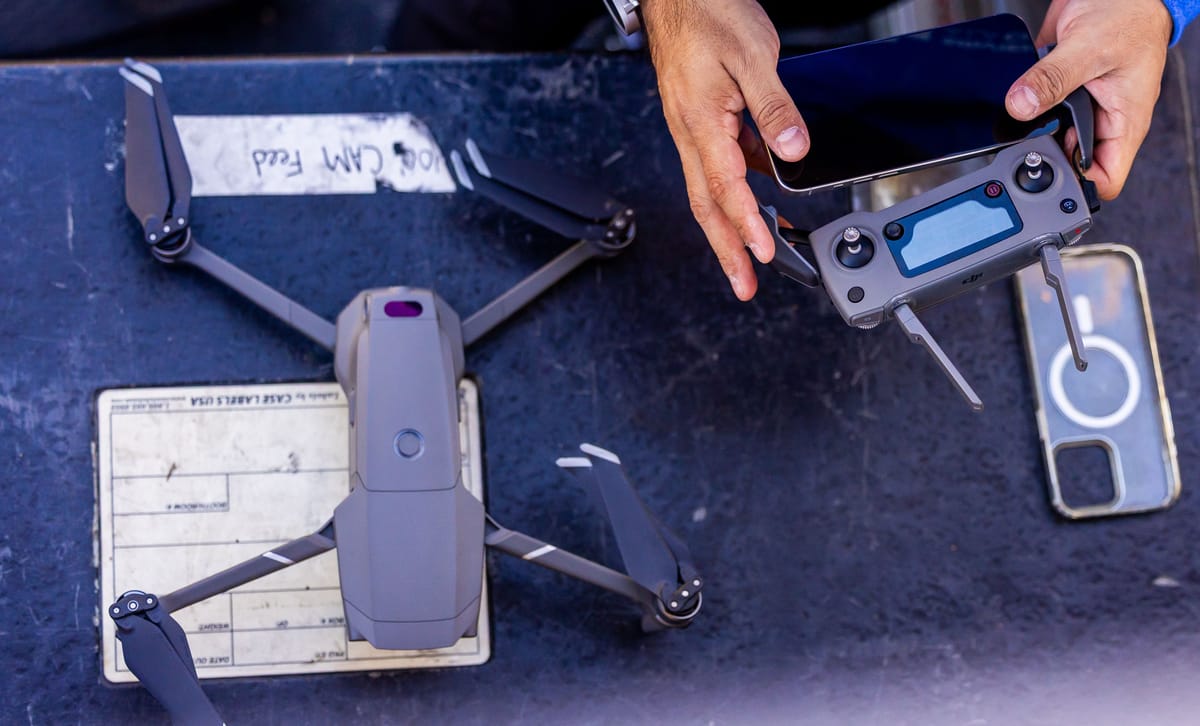
A commercial drone fleet needs more than extra airframes. Build clear aircraft records, pilot currency checks, data custody and job handoffs before the work becomes harder to control.
You Own A Business That Flies Drones: What Building A Drone Photography Career Actually Takes
A recent Commercial UAV News webinar made the point plainly: a drone photography career is a business first and a flight skill second. Pricing, post-processing, backups and compliance decide whether the work lasts.