
The Flight Plan Needs A Workload Plan
Human factors matter on ordinary commercial drone jobs. Crews need roles, callouts, stop triggers and handoffs before one pilot is asked to watch everything at once.
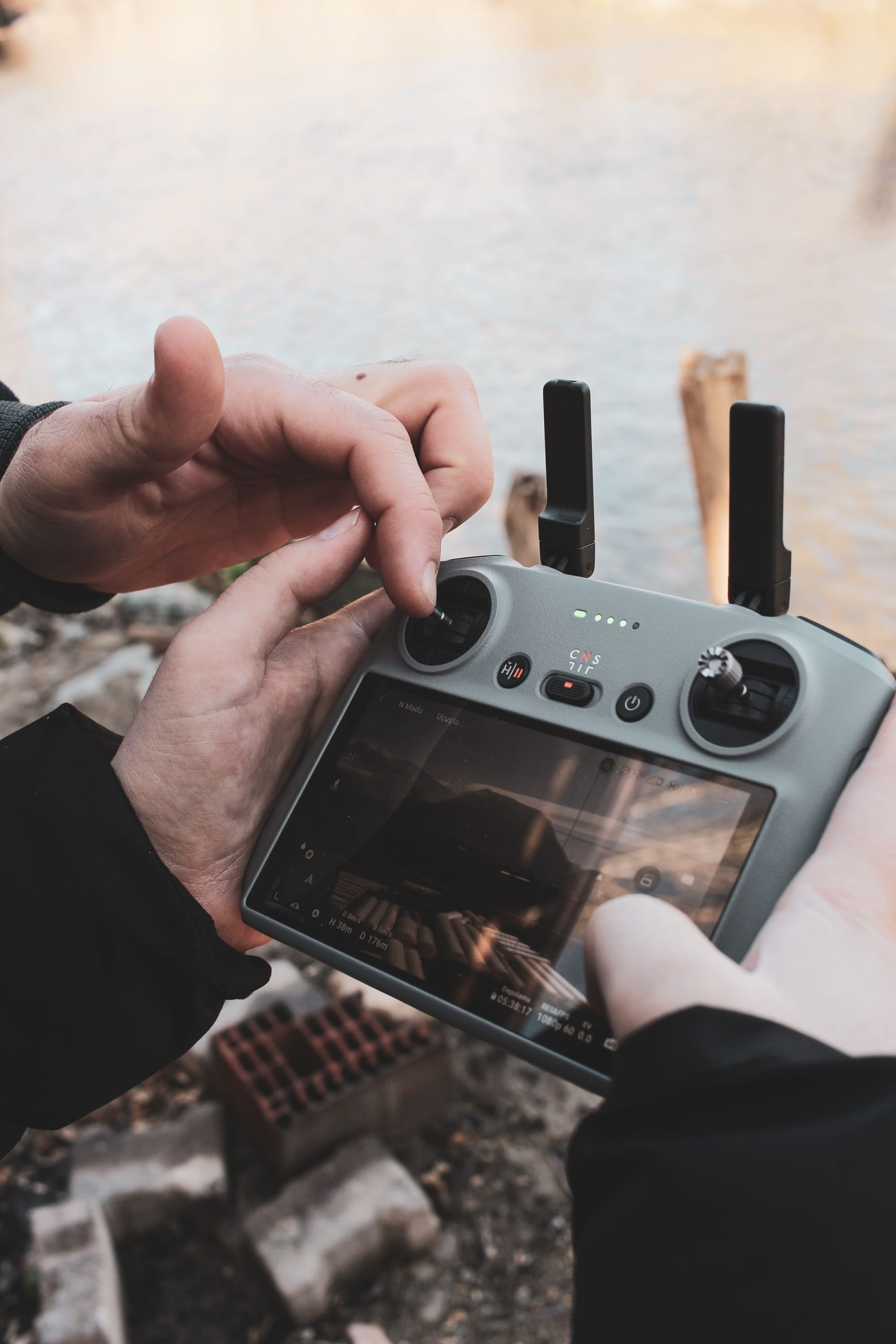
A commercial drone mission can look simple from the outside: one aircraft, one controller and one pilot at a worksite. The actual job is usually much denser. The pilot is watching the aircraft and the screen, listening for a visual observer, tracking battery margin, responding to a site contact and deciding whether the requested image is good enough to avoid another pass.
A July 22 DroneLife article on human factors in drone operations put a useful label on this field problem: cognitive load. The useful point for commercial teams is not the terminology. It is that safe operations require a plan for the person at the controls, not only the aircraft and airspace.
That matters most when a job is routine enough to invite overconfidence. A roof capture, a construction progress flight or a linear inspection pass may not look complicated on a planning sheet. But work expands quickly when the client changes the request, a radio call arrives, the screen becomes hard to read or a second operator needs help. The crew has to decide in advance which task wins when everything asks for attention at once.
The Real Workload Is Larger Than The Controller
Every pilot manages a set of information streams. At a minimum, there is the aircraft's position, its route, battery state, weather and airspace. On commercial work there may also be a camera feed, mapping coverage, site hazards, a customer request, a radio channel and a flight log. Treating all of those as individual pilot duties is a fragile design.
The weakness is not that a pilot lacks skill. It is that a single person cannot give equal attention to every changing input. A pilot looking down to confirm overlap on a mapping run is not looking at the aircraft. A pilot answering a supervisor's question is not listening closely to a visual observer. A pilot troubleshooting a weak link may miss that the original flight objective is no longer achievable within the planned battery reserve.
This is why the flight plan needs a workload plan. The plan should state which signals are safety critical, who owns each one and what happens when two demands arrive together. It should be short enough to use on a tailgate briefing and specific enough to reflect the real job.
Start With One Mission Decision
Before the aircraft comes out of the case, the crew should be able to answer one question: what decision will this flight support? "Inspect the roof" is not enough. "Confirm whether the north-facing flashing has damage that needs a close ground inspection" is a usable mission purpose. So is "collect complete oblique imagery of the west tank shell before the contractor arrives."
A clear decision reduces needless tasks in flight. It tells the crew what to ignore, when the required evidence has been collected and when a customer request should become a separate sortie. It also avoids the common habit of adding one more look until the battery margin becomes the mission plan.
The pre-flight brief should then name the items that can end the mission: battery reserve, changing weather, people entering the area and a loss of required visual or communications coverage. Transport Canada's safe and legal flying guidance is a reminder that site awareness and rule compliance stay active during the flight, not only before takeoff.
Give Every Role A Narrow Job
A small crew does not need a large command structure. It does need role separation when the site or mission justifies it. The remote pilot in command should retain authority for the flight. That does not mean the pilot must operate the camera, manage the client and handle every communication at the same time.
A practical division for a two-person or three-person crew is simple. The remote pilot in command owns aircraft path, airspace and the abort decision. The visual observer or safety spotter owns the aircraft's surrounding area, people or vehicles entering the site and direct safety callouts. Mission support, when available, owns camera framing, capture lists, customer questions, file notes and coordination that does not need to interrupt the pilot.
The labels are less important than the boundaries. If the observer is also trying to operate a camera tablet, make a site call and scan for hazards, the team has merely moved the overload from one person to two. On a one-person job, the workload plan should become more conservative: shorter sorties, fewer simultaneous objectives, a hard rule against nonessential calls while airborne and a deliberate landing before changing the mission.
Use Callouts And Stop Conditions
Busy moments are not the time for detailed discussion. Teams should agree on a handful of words that create a known response. "Traffic" means the pilot immediately looks for the reported hazard and prepares to yield or land. "People" means the controlled area has changed. "Return" means the aircraft is coming home now, not after the current photo. "Hold" means stop forward progress while the crew resolves the condition.
The same idea applies to stop conditions. If battery reserve reaches the agreed threshold, the aircraft returns. If a person enters the controlled area, the aircraft holds or lands. If the observer cannot maintain the required view, the pilot returns to a safe position or terminates the pass. These decisions should not become negotiations while the aircraft is airborne.
Build Handoffs Into The Job
Workload also builds over time. A crew that has been managing a mission for several hours can miss subtle changes in weather, lighting, signal quality or customer priorities. A handoff note is a small control that prevents the next person from reconstructing the job from memory.
A useful handoff includes current aircraft or route status, battery or fuel margin, weather trend, communication status, active airspace constraints, completed capture list, open anomalies and the next decision the client needs. That discipline matters on inspection work and emergency response work alike. Aerosyne's look at Hurricane Melissa and emergency drone teams made the same point at the incident level: assigned areas and clear data handoffs keep urgent work from turning into confusion.
The Practical Takeaway
A workload plan does not need to be complex. It needs to say what the flight is for, who owns each safety-critical signal, which callouts trigger action and when the team stops instead of improvising. Commercial drone work is becoming more capable, but the human at the controls is still part of the safety system.
Build the workload plan before the flight plan gets busy. That is where avoidable risk is easiest to remove.

Related reading
Continue the thread.
Related posts are pulled from the same primary topic as the current article.

Commercial Drone Demand Is Broadening, But Operations Are Still The Bottleneck
FAA and Transport Canada signals point to a larger commercial drone base, but the hard part is shifting from interest to repeatable operations, approvals and operator discipline.

Seven Drone-Related Public Companies To Watch In 2026
A fact check changes the draft framing: DJI and Skydio are not public stocks. For 2026, the better lens is public drone-related exposure, not a simple list of pure-play drone stocks.
Commercial UAV Expo 2026 To Showcase Latest Industry Developments
Commercial UAV Expo 2026 is scheduled for September 1-3 at Caesars Forum in Las Vegas, with sessions focused on practical commercial drone operations.