
Offshore Wind Inspections Are Quietly Becoming The Most Demanding Drone Mission Set
Offshore wind inspections combine blade-detail requirements, marine weather, vessel logistics and airspace constraints. For drone teams, it is one of the hardest commercial mission profiles.
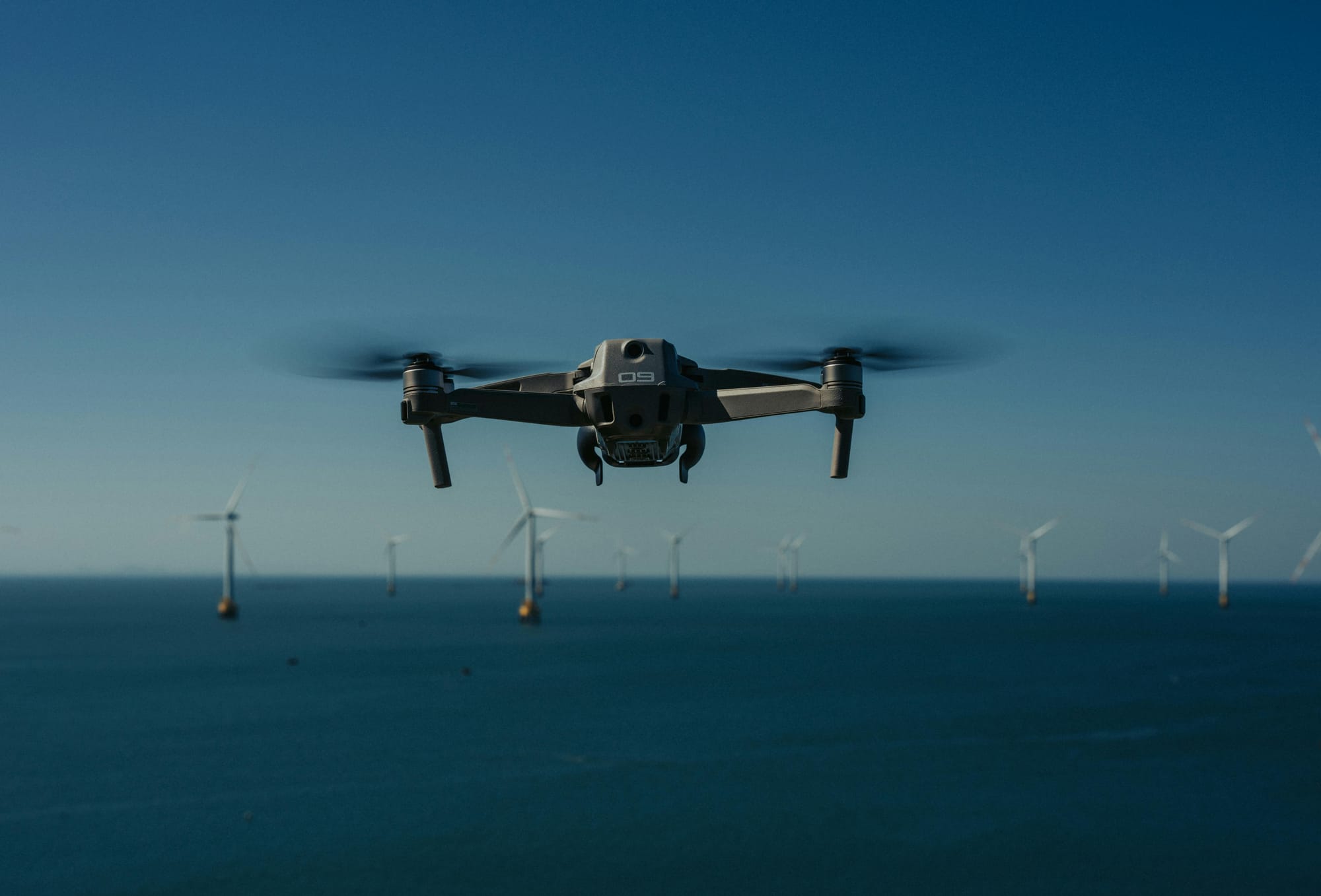
Wind-turbine inspection is already a demanding drone mission on land. Offshore, the difficulty increases. Operators have to manage marine weather, vessel motion, corrosion, launch and recovery constraints, turbine access windows and the need for blade-detail imagery that maintenance teams can trust.
Business Norway notes that offshore drones must withstand saltwater corrosion, harsh environmental conditions and high winds. Unmanned Systems Technology's wind inspection guide also points to blade defect detection, thermal imaging and photogrammetry as key inspection functions.
Why Offshore Is Harder Than It Looks
A turbine blade inspection is not only a photo mission. The operator needs consistent coverage of leading edges, trailing edges, lightning receptors, root sections and surface defects. Offshore work adds a moving support environment and tighter weather decisions.
The downtime economics are different too. Vessel day rates, crew schedules and turbine availability make failed or partial flights expensive. A drone team that cannot deliver clean data inside a weather window can cost the client more than the inspection fee.
What Clients Should Ask For
- Marine operating procedures. Launch, recovery, emergency landing and battery handling need offshore-specific planning.
- Data standards. Blade imagery should be labeled, georeferenced or indexed so defects can be tracked over time.
- Weather criteria. Wind, precipitation, visibility and sea state should be written into go/no-go rules.
- Integration. Inspection data needs to feed maintenance planning, not sit as a folder of images.
The Practical Takeaway
Offshore wind inspection is a strong market for drone service providers, but it rewards maturity. The operators who win will be the ones who can combine aviation discipline, marine procedures and inspection-grade data.

Related reading
Continue the thread.
Related posts are pulled from the same primary topic as the current article.
The Dataset Is the Deliverable: What a Transformer Inspection Program Has to Prove
A transformer inspection program creates value when each image is tied to the right asset and condition decisions can be traced to evidence.

China's Export List Just Drew a Line Through Long-Range Inspection Aircraft
China's revised dual-use export list sets technical thresholds that reach some inspection aircraft and components. Buyers should map specifications and licensing needs before 18 November.

The Fire Season Ends. The Aerial Damage Assessment Is Just Starting.
Public Safety Canada's October update closed the 2026 wildfire season at more than 5,400 fires and roughly 4.5 million hectares burned. The recovery phase that follows runs on aerial evidence, and a proven federal deployment shows what that programme has to produce.