
Canada's Drone Industry Hits Its Stride: What the 2025-2026 Regulatory Overhaul Means for Operators
Canada's drone framework has shifted from experimental to operational. With routine BVLOS now possible under Level 1 Complex certification, operators face new compliance obligations and new competitive advantages.
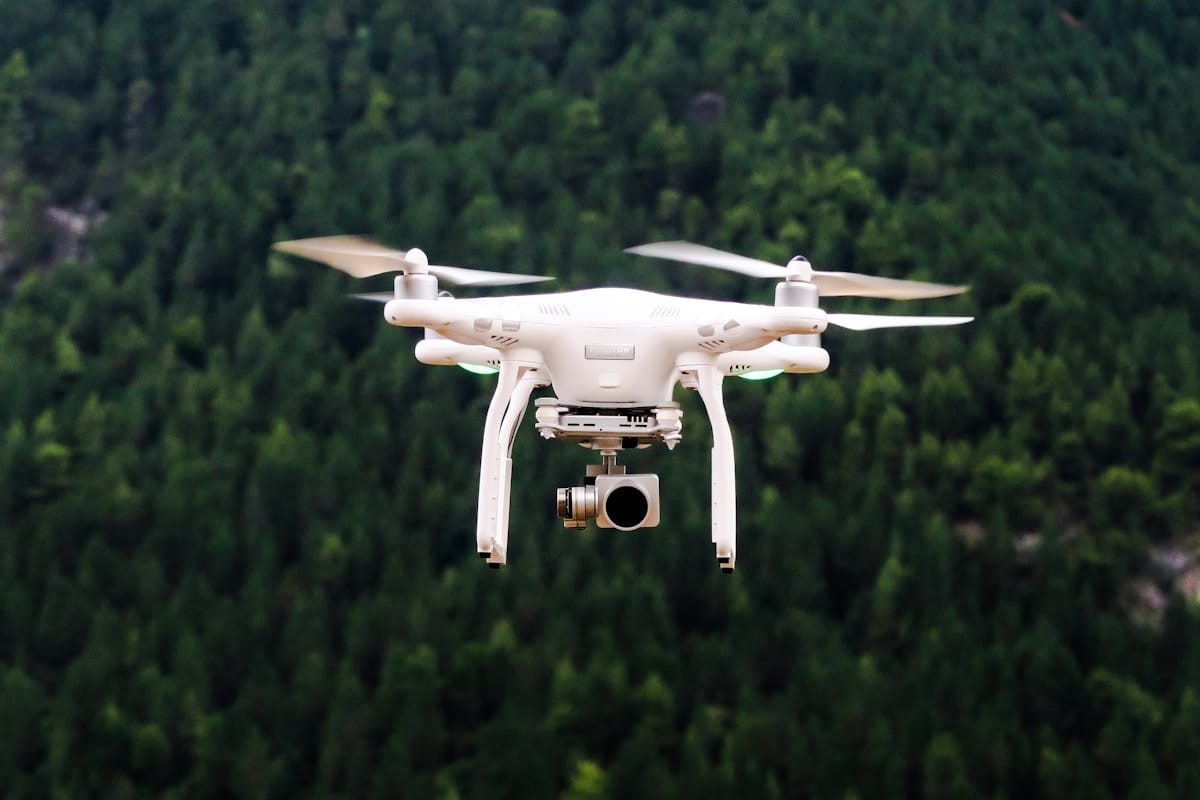
This month, Transport Canada published the sixth issue of its Drone Zone bulletin, a signal that the country's unmanned aviation framework is maturing in real time.
For Canadian operators, the message is clear: the regulatory scaffolding is finally catching up to the technology, and the window for early mover advantage is closing fast.
This month, Transport Canada published the sixth issue of its Drone Zone bulletin, a signal that the country's unmanned aviation framework is maturing in real time.
For Canadian operators, the message is clear: the regulatory scaffolding is finally catching up to the technology, and the window for early mover advantage is closing fast.
The Shift to Routine BVLOS
The most consequential change came into force on November 4, 2025: certain beyond visual line of sight (BVLOS) operations no longer require a Special Flight Operations Certificate (SFOC). Instead, pilots can now qualify under a new Level 1 Complex Operations certification and fly under a defined set of rules.
This is not a free-for-all. To conduct lower-risk BVLOS, pilots must:
- Hold a valid Level 1 Complex Operations certificate
- Operate on behalf of an organization with an RPAS Operator Certificate (RPOC)
- Fly at least 1 km from populated areas (or over sparsely populated areas, depending on drone size)
- Maintain a Detect and Avoid (DAA) capability, such as visual observers or an approved system
The distinction matters. Transport Canada explicitly notes that short-range obstacle avoidance systems (the kind found on most consumer drones) do not qualify as DAA under Standard 922.10. For BVLOS, you need a system that can detect other aircraft and provide enough time to maneuver, not just avoid a stationary obstacle.
Safety Assurance and Manufacturer Accountability
Issue 6 of Drone Zone also doubles down on safety assurance declarations. Any drone used for Advanced or Level 1 Complex operations must have a valid manufacturer declaration stating it meets the technical requirements of Standard 922.
Pilots are now responsible for verifying this before every flight.
Manufacturers, in turn, face a steeper compliance curve. Those seeking Pre-Validated Declarations (PVDs) must submit documentation for review at a cost of $1,220.40 per application. For operators, this means equipment procurement is no longer just about price and payload, it is about whether the manufacturer has done the paperwork as well.
The Numbers Behind the Momentum
Canada's drone sector is not a niche anymore. As of December 2025, Transport Canada had registered 116,304 drones and issued 128,888 Basic Pilot Certificates alongside 20,138 Advanced Pilot Certificates. The country is home to over 1,000 drone companies employing more than 22,000 people, with 70% concentrated in Ontario, British Columbia, and Alberta.
Market projections put the broader Canadian drone industry at roughly CAD $13.4 billion by 2030, growing at about 16% annually. Agriculture, mining, energy infrastructure, and emergency services are the primary demand drivers.
What This Means for Field Teams
For operators running work in the field, the new rules create both opportunity and obligation:
1. Certification stacks are deeper now. A Basic certificate is no longer enough for commercial work that pushes past visual line of sight. Teams need to budget time and money for Level 1 Complex training ($50.85 exam fee, $127.13 certificate fee) and RPOC registration ($127.13 fee).
2. Equipment audits are essential. If your fleet lacks safety assurance declarations for the operations you are bidding on, you are flying illegally. Full stop.
3. SFOCs are not dead, they are just for complex work. Higher-altitude flights, operations at advertised events, and anything over 150 kg still require an SFOC.
Fees now apply across the board (except for emergency response government operations), so budget accordingly.
4. Urban C2 is the next frontier. Transport Canada and ISED are both signalling that command and control link reliability in urban environments is a priority. The consultation on CNPC link radios closed April 10, 2026.
Expect new spectrum allocation guidance soon.
Bottom Line
Canada's drone regulatory framework has moved from experimental to operational. The operators who thrive in 2026 and beyond will be the ones who treat compliance as infrastructure, not an afterthought.
Get your certificates current, audit your fleet's declarations, and build your operating procedures around the new normal; routine BVLOS is here, but only for those who are ready and prepared for it.

Related reading
Continue the thread.
Related posts are pulled from the same primary topic as the current article.

The Flight Plan Needs A Workload Plan
Human factors matter on ordinary commercial drone jobs. Crews need roles, callouts, stop triggers and handoffs before one pilot is asked to watch everything at once.

Commercial Drone Demand Is Broadening, But Operations Are Still The Bottleneck
FAA and Transport Canada signals point to a larger commercial drone base, but the hard part is shifting from interest to repeatable operations, approvals and operator discipline.

Seven Drone-Related Public Companies To Watch In 2026
A fact check changes the draft framing: DJI and Skydio are not public stocks. For 2026, the better lens is public drone-related exposure, not a simple list of pure-play drone stocks.