
Canada's New RPAS Pesticide Policy Is A Field-Operations Change
Health Canada's final RPAS pesticide policy creates a path for aerial-labelled products, but operators still need disciplined label review, crew roles, PPE, calibration and provincial approvals.
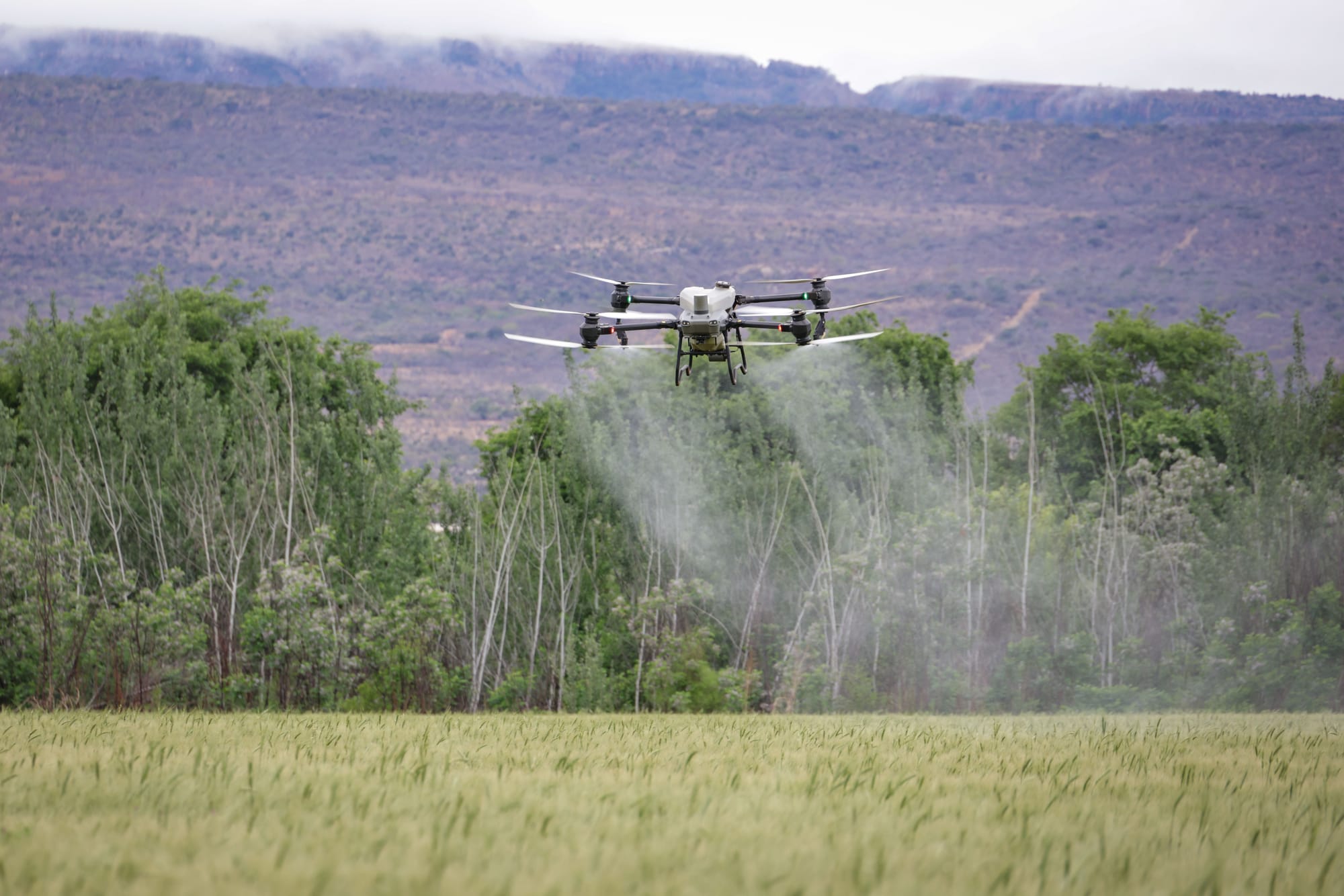
Health Canada's June 30 policy change has opened a meaningful new operating path for Canadian agricultural drone teams. It does not mean that any drone, any pesticide and any field can now be sprayed. It means an RPAS can be used to apply a pest control product that is already registered for conventional aerial application, provided the operation follows the product label and the full stack of federal, provincial and territorial requirements.
That distinction is the whole story.
For years, the limiting question was often whether the pesticide label named drones. Under Science Policy Document SPN2026-02, a product with permitted conventional aerial use can generally be applied by RPAS without waiting for an RPAS-specific label amendment. But the rule does not relax the aerial directions that make the use legal. Rate, spray volume, retreatment interval, buffer zones, personal protective equipment and other label controls still apply.
This is the final-policy follow-up to the earlier PMRA proposal Aerosyne covered in what it changes for Canadian ag operators. The operational takeaway is now sharper: do not build a spraying service around the aircraft first. Build it around the label, the crew and the field process. The aircraft is one controlled part of a pesticide-application system.
What Changed On June 30
Health Canada's announcement says the policy allows drone technology to apply pesticides already approved for conventional aerial application. The department also said the consultation received more than 150 comments and that users must still comply with federal and provincial or territorial laws, including Transport Canada certification and required training.
The policy removes a regulatory bottleneck. Aerial-labelled products no longer need a separate RPAS label amendment merely because the application platform is a remotely piloted aircraft. That can make drone application available for crops or sites where wet ground, difficult terrain, crop height, timing or limited access make a ground pass impractical.
It is not a blanket authorization. A label that says aerial application is prohibited remains a no. A product with no aerial-use direction remains a no. A label that is later amended to say RPAS application is prohibited also remains a no. The policy does not let a crew choose a lower volume, tighter buffer or different rate because a drone can fly lower or more slowly than a conventional aircraft.
The Label Is Still The Mission Plan
SPN2026-02 says existing aerial directions remain in force. Application rate, number of applications, retreatment interval, spray volume and aerial spray buffer zones all stay in place. Health Canada also cautions that spray volume must not be reduced below the minimum aerial volume shown on the product label.
That is an important guardrail. A lower-volume drone pass may look efficient on a planning screen, but efficiency does not override a registered use direction. A crew that changes volume, rate or interval without a valid label basis has changed the job from an authorized application into an uncontrolled experiment.
Before scheduling a flight, put the exact label version in the job package and record the basics: product name and registration number, crop or use site, confirmation that aerial application is permitted, rate, minimum spray volume, retreatment interval, buffer zones, PPE, weather window and stop conditions. This prevents a pilot from discovering a restriction after the tank is loaded and the client is waiting at the field edge.
Separate The Mixer From The Pilot
The policy creates a firm crew-design requirement: the person who mixes and loads pesticide must not be the RPAS pilot. If a label allows the pilot to load premixed chemical with a closed system, that can be done only after another person has mixed the product and only with that closed transfer system. Without it, the pilot cannot load the pesticide.
This rule changes the economics and staffing of a one-person drone job. A solo pilot cannot simply mix, fill, launch, land, swap batteries and clean the aircraft. Teams need at least a defined mixer-loader role and a pilot role. Depending on the operation, a visual observer, site lead or logistics person may also be needed.
The purpose is exposure control. Health Canada points to mixing, loading, maintenance, cleaning and battery changes as exposure-sensitive activities. The pilot may be physically distant during the application pass, but the controller, tablet, vehicle door, battery case and transport equipment need to remain clean. A contaminated glove on a remote controller creates a cross-contamination problem that can follow the crew through the entire day.
PPE, Calibration And Swath Width Are Not Secondary Tasks
Health Canada says all people involved in an RPAS application must wear at least the PPE required on the label. That includes mixers, loaders, pilots, visual observers and workers who handle the aircraft, batteries or any component that may carry residue. The minimum listed in the policy includes a long-sleeved shirt, long pants, chemical-resistant gloves, socks and shoes, with additional requirements where the label calls for them.
Calibration is the other place where a capable aircraft can still produce a poor application. The policy calls for a uniform spray pattern, label-compliant droplet sizes and a consistent effective swath width. Health Canada recommends establishing the actual swath width before the first application and whenever operating parameters change, using appropriate testing resources such as water-sensitive paper.
Do not use the manufacturer brochure's coverage number as the field answer. Nozzle setup, flow, altitude, speed, rotor wash, crop canopy, liquid formulation and weather can change the effective result. A service provider should maintain a calibration record for each aircraft and nozzle configuration, then tie that record to the flight plan used for the job.
Aviation Compliance Still Runs In Parallel
Health Canada regulates pesticide use. Transport Canada regulates the RPAS as an aircraft. Both lanes apply at the same time.
SPN2026-02 says all RPA pilots, including users applying on their own land and commercial applicators, must register the aircraft and hold the Transport Canada certificate appropriate to the aircraft and operation. The policy gives the example that medium RPA from 25 to 150 kilograms require an Advanced Pilot Certificate for visual-line-of-sight work, or a Level 1 Complex Pilot Certificate for eligible lower-risk beyond-visual-line-of-sight operations. A visual observer used under the policy must hold at least a Basic RPA Pilot Certificate.
Those requirements should be checked before a pesticide job is accepted, not after a field is booked. A heavy-lift sprayer may solve the tank-capacity problem while creating a different certification, aircraft-registration, crew or site-planning problem. A long field can invite a route that exceeds visual-line-of-sight limits.
Provincial Approval Is The Last Gate
Pesticide use is shared across federal, provincial and territorial authorities. Health Canada's policy does not replace provincial pesticide licences, permits, education requirements or location-specific restrictions. Provinces and territories can set conditions for sale, purchase, storage, transport, use and disposal, and may require permits for aerial application or impose their own buffer requirements.
Commercial operators should treat each province as a separate operating environment. Build a jurisdiction file before marketing services in that area. Include applicable applicator licensing, approved training, permit triggers, reporting requirements, local buffer rules, product-storage requirements and contact information for the regulator. Review it before each season and when a product, aircraft class or service area changes.
That operational discipline is also the economic lesson from Aerosyne's earlier post on precision ag drone spraying service-provider economics. Drone spraying can be a real service line, but only when compliance, crew design and repeatable field process are part of the quote.
The Practical Takeaway
Canada has created a useful opening for agricultural RPAS work, but it is an opening into a disciplined application program, not a shortcut around pesticide regulation. The durable operators will be the ones who can answer basic field questions quickly and accurately: Is this product aerial-labelled? What is the approved rate and minimum volume? What buffer applies? Who mixed the load? Who is flying? Who touches the aircraft after the pass? What certification and provincial permission apply at this site?
Treat the label as the mission plan, separate chemical handling from flight control, keep the controller clean, prove the swath before spraying and verify every provincial requirement before mobilizing. That is how a policy change becomes a repeatable field operation.

Related reading
Continue the thread.
Related posts are pulled from the same primary topic as the current article.

Transport Canada Just Put the Radio Link in the Weather Section
Transport Canada now places urban command and control guidance beside wind guidance. Brief the radio path and the airflow as one operating environment.

Line-side resupply is the number worth keeping
Aerial resupply of planting crews closed its season with more than a million seedlings delivered. What made it work was not lift capacity, it was removing walking from the crew's day.

Why a rooftop drone response needs its own rulebook
Running emergent aerial response and scheduled investigative flying on the same fleet looks efficient. The first quarter of a Canadian program shows why the two are kept apart.