
Why Interoperability Is Becoming the Central Business Case for Commercial Drone Platforms
A new distribution partnership is bringing a Japanese built NDAA compliant drone platform to Canadian operators. But the bigger story is what it reveals about how commercial drone buying decisions are shifting.
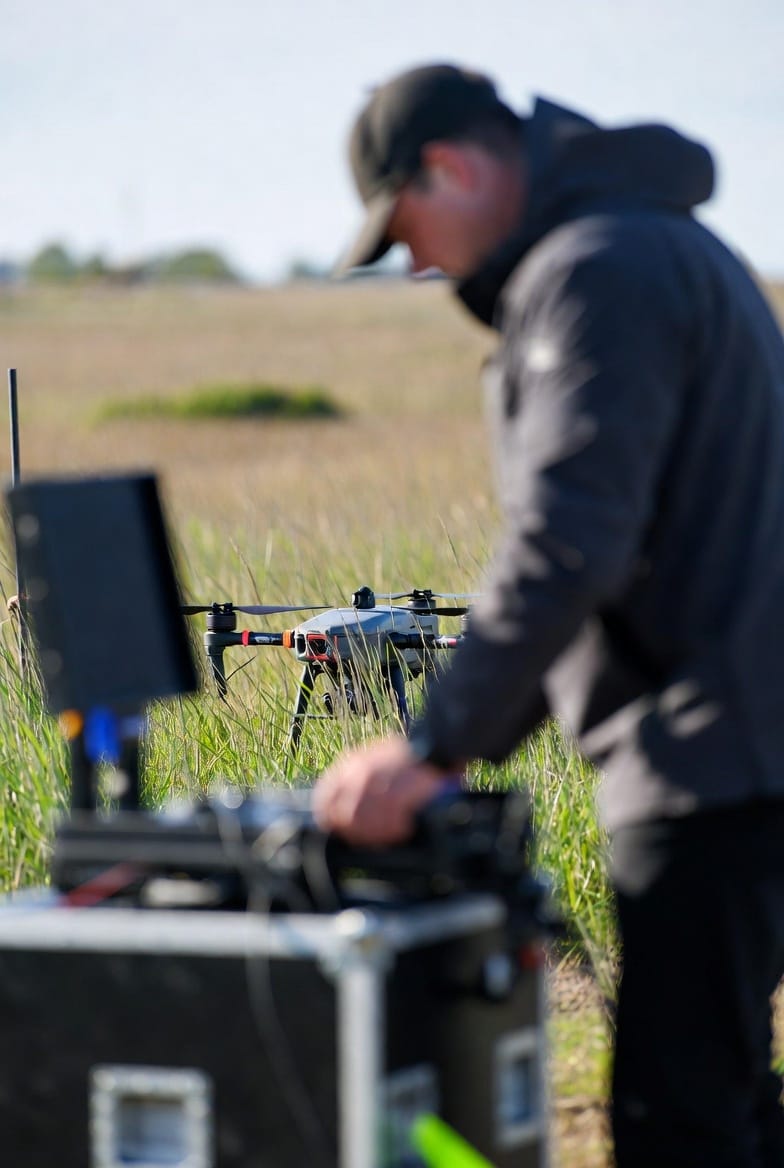
Draganfly's announcement that it will serve as the exclusive Canadian distributor for ACSL's SOTEN drone platform comes with a detail that deserves more attention than it's getting: the two systems are designed to be operated from the same ground control station.
ACSL's TAITEN smart controller, a 7-inch, 1500-nit IP54 rated rugged display with customizable buttons, is compatible with Draganfly's Commander 3XL, Apex, and Heavy Lift platforms, in addition to ACSL's own SOTEN.
That means a pilot certified on one ecosystem can transition to the other without learning a new interface. Payload mounts for 6.6 to 100+ pounds are cross compatible.
This is not a trivial feature. It's a fleet architecture decision.
What Interoperability Actually Changes for Operators
Commercial drone operators running more than one airframe typically face a real operational friction: different ground stations, different software stacks, different payload mounting systems. Training time multiplies with each new platform. Spare parts inventory grows. Pilot certification documentation becomes a logistics problem of its own.
The DaaS (Drone as a Service) model, which is expanding rapidly across North America, amplifies this problem. Operators deploying multiple drones across different job sites need their crews to be proficient across platforms, and they need their logistics and maintenance teams to be able to service whatever shows up on a truck.
Platforms designed for cross-fleet interoperability address this directly. The operator doesn't buy a drone; they buy into an ecosystem. ACSL's SOTEN is built around swappable payloads, standard camera, dual thermal-optical, multispectral, optical zoom, and the platform architecture is explicitly designed to integrate with systems outside its own lineage.
Draganfly's North American service and support network closes the loop for Canadian commercial operators.
NDAA Compliance as a Filtering Mechanism
One practical consequence of the ACSL partnership: Canadian operators in government, utilities, and critical infrastructure now have a clearer pathway to NDAA compliant platforms that don't require navigating the supply chain complexity of importing directly from Japanese manufacturers.
NDAA compliance has become a de facto requirement for a growing list of commercial and government operations in North America, not because of regulatory mandate but because of procurement requirements downstream. Having NDAA compliant platforms available through established domestic distribution channels reduces the lead time and technical barrier to meeting those requirements.
The commercial drone market in Canada is projected to grow from approximately $6.1 billion in 2026 to over $19 billion by 2033, according to recent market analysis.
A significant driver of that growth is enterprise adoption, organizations that buy drone services or drone fleets as operational infrastructure, not as one-time use tools. Those buyers have procurement requirements. Platforms that check those boxes will capture disproportionate share of that growth.
The Takeaway for Operators Evaluating Platforms
The question is no longer simply "what can this drone do?" It's "what can this ecosystem do, and how easily does it integrate with the other systems we're already running?"
Interoperability, across airframes, ground stations, and payloads, is becoming a competitive differentiator in the commercial drone space. The Draganfly-ACSL partnership is one example of that trend playing out in the Canadian market.

Related reading
Continue the thread.
Related posts are pulled from the same primary topic as the current article.

Transport Canada Just Put the Radio Link in the Weather Section
Transport Canada now places urban command and control guidance beside wind guidance. Brief the radio path and the airflow as one operating environment.

Line-side resupply is the number worth keeping
Aerial resupply of planting crews closed its season with more than a million seedlings delivered. What made it work was not lift capacity, it was removing walking from the crew's day.

Why a rooftop drone response needs its own rulebook
Running emergent aerial response and scheduled investigative flying on the same fleet looks efficient. The first quarter of a Canadian program shows why the two are kept apart.